
Your name is on the work. Somebody else carries it out.
Installation, maintenance and service are increasingly done by parties who are not on your payroll. Their craftsmanship determines your failure costs, your warranty claims and your reputation, yet you cannot fold them into your internal training programme. We build training that does reach them.
Discuss this situationResults
- › One standard across your entire network
- › Provably competent, per engineer
- › Multilingual, without a separate programme per country

You can demand quality in a contract. You cannot enforce it without training.
A subcontractor has its own specialists, its own way of working and its own planning. What it does not have is your product knowledge: the reason a connection is made this particular way, the mistake that only surfaces two years later, and what your warranty terms actually say.
Classroom partner training solves that halfway at best. It reaches the people who can travel, on the date that happens to suit, and staff turnover at the subcontractor undoes the effect within a year.
Digital training turns that around. Available the moment a new engineer starts, in their own language, with registration per person instead of per company.
Where this shows up
- › Installation faults that only become visible as warranty claims
- › Service partners spread across several countries and languages
- › Turnover at subcontractors undoing training again and again
- › No view of who is actually qualified
- › New product versions reaching the network too late
Where this ends and something else begins.
Subcontractor training is about occupational competence over a longer period: can this engineer install, maintain and fault-find this product correctly. That is something other than giving someone access to a site, and something other than bringing one project into line.
If the question is contractors who need to know the site rules and risks before day one, then site induction is the right form. For a large project in which dozens of parties have to work to one and the same safety standard, that is training for complex project teams.
In practice they run into each other: a service partner maintaining your product usually has to be inducted on site as well. We then build them as separate modules on one platform, so nobody works through the same thing twice.
The STARK 4D method
How we turn every challenge into a working solution, in four steps.
We start with your problem, not our solution.
What's really going on? What does success look like? We map what exists, what's missing, and what your people actually need. No assumptions, no templates. Just honest scoping and concrete examples of what's possible.
We translate your challenge into a clear plan.
Approach, format, timeline, all worked out with your team before we build anything. You know exactly what you're getting. No surprises halfway through.
We build it, and test it with your people.
Whether it's a VR simulation, an interactive module or a full blended programme: your subject matter experts are part of the build. That's how we make it accurate and relevant to the work floor.
Going live is the start, not the finish.
We support rollout, adoption and embedding. We track whether the training works and adjust where needed. Because training that's not used has no value.
Lower failure costs
Installation faults you would otherwise meet as a claim are prevented at the source.
A view of your network
Visible per engineer who is qualified for which product and which version.
Scales with your growth
A new partner or a new country costs a language, not a new training programme.
You reach a partner network differently than your own people: without a company account, in several languages, and with proof per person.

TotalEnergies Gas Mobility
Training service crews for stations spread across Europe
3
learning formats in one programme: 3D work instructions, blended and micro learning
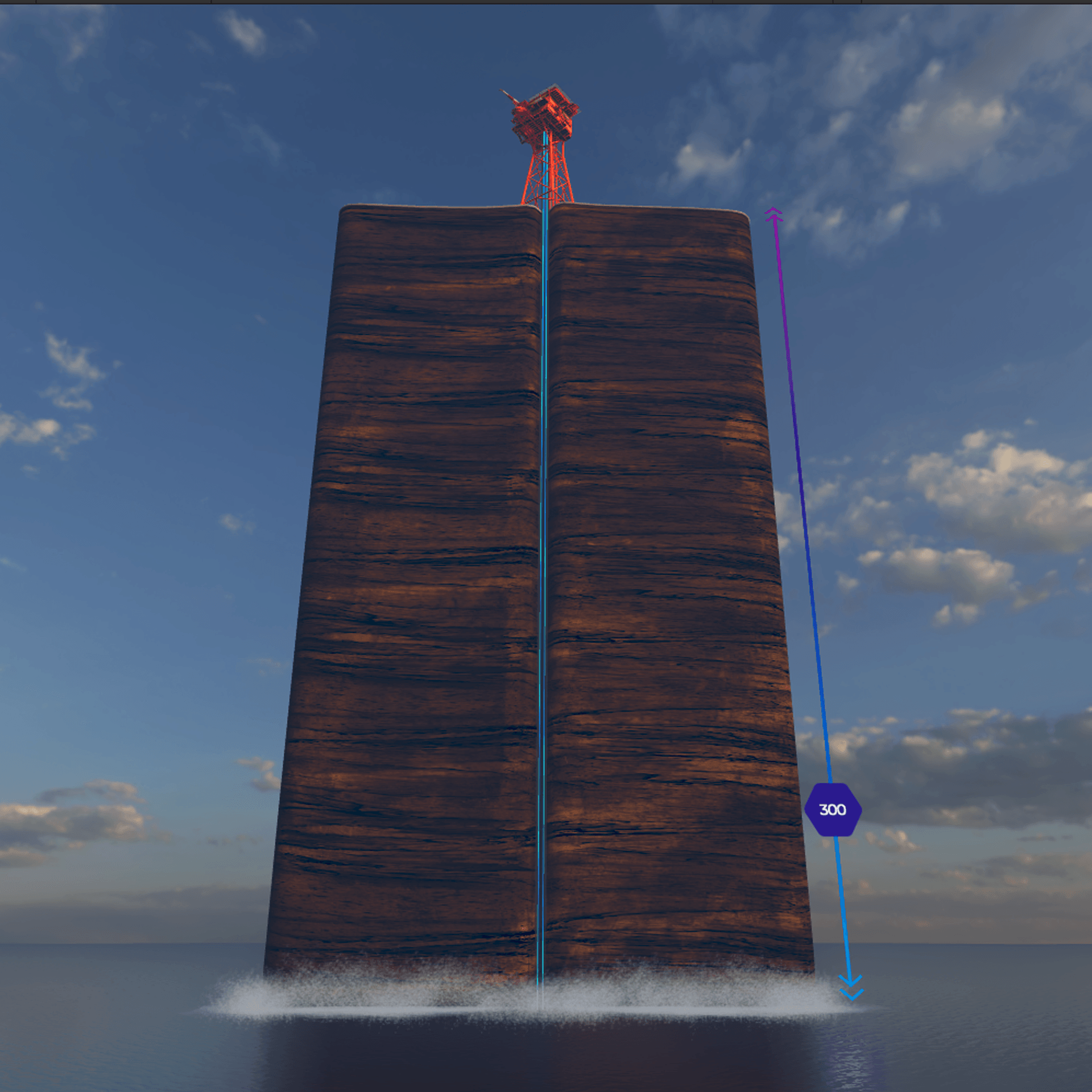
Porthos
An invisible infrastructure that everyone understands
2 months
from briefing to live, in time for opening day
Where are you right now?
Not everyone reading this is ready for a conversation. Pick the step that matches where you are.
01 · Orient
Measure where you stand
Ten questions across five dimensions. You get a radar chart of your training maturity plus three things you can act on straight away.
Take the maturity scan
No form · 5 minutes
02 · Compare
See what it did for others
Cases at Gasunie, Enercon, TotalEnergies and Nel, with what actually changed in onboarding, retention and incidents.
View the cases
No form
03 · Decide
Put your situation to us
Tell us what you are dealing with. You get an assessment of approach, lead time and cost, not a sales pitch.
Ask for an assessment
Response within 24 hours
Do you work with a network of installers or service partners? Then this is the conversation.
Milan
Business development, STARK Learning