
Your HAZOP report is excellent. Your operators don't know it.
Process installations are safely designed. The problem is not the design but the gap between what procedures describe and what operators do when it comes down to it. Rare scenarios, production pressure that crowds out safety procedures, ageing experts who take tacit knowledge into retirement, and contractors who appear on site during shutdown without knowing the installation. We close that gap.
Ask for the approach in your sector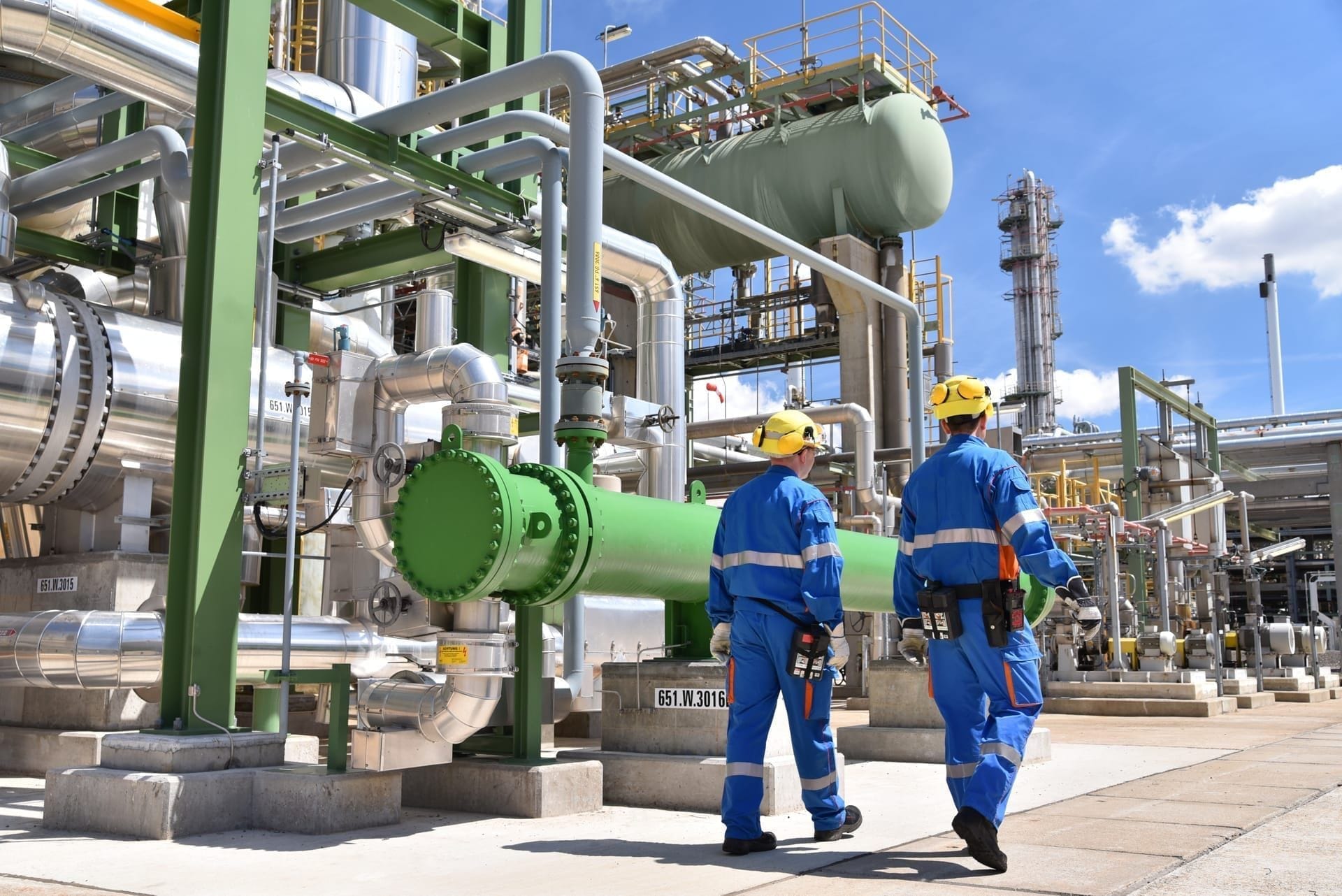
Process safety competes with production pressure, and rare scenarios rarely win.
In chemical plants and refineries, safety is always the priority, until production is at stake. That's not cynicism, that's operational reality. Operators who work day after day without incident inevitably lose their feel for what goes wrong when a rare deviation occurs. HAZOP reports describe exactly those scenarios, but they're written for engineers, not for the operator at four in the morning.
At the same time, the experts are leaving. The process operator who knows why the reactor responds differently in winter, the maintenance planner who can coordinate the shutdown from memory, that knowledge isn't in the procedures. When that person leaves, the knowledge disappears.
And every turnaround brings hundreds of contractors on site who don't know the installation. The quality of their induction directly determines the safety and efficiency of the shutdown. Poor induction costs you not just incidents, it costs you throughput time.
Challenges we recognise
- › Process safety loses out to production pressure in daily practice
- › Rare but critical scenarios are underrepresented in standard training
- › Ageing experts hold tacit plant knowledge that is written nowhere
- › Contractor onboarding quality makes or breaks shutdown performance
- › HAZOP knowledge sits with engineers, not with the operator who needs it
- › PTW discipline and LMRA are seen as formalities, not as protection
What we build for chemical and process industry teams.
From process safety training based on your HAZOP to shutdown-focused contractor induction, always built on your installation, not a standard model.
Process safety based on your HAZOP →
We translate HAZOP scenarios into interactive training that operators understand and recognise. Gas-free declaration, isolation procedures, deviation management, built on your failure modes and your installation. Not generic, not theoretical.
Knowledge transfer from senior to junior →
The process operator with thirty years of plant knowledge is leaving. We capture that knowledge before that moment, in structured extraction sessions that we convert into repeatable modules. What takes ten years of shadowing, we transfer in weeks.
Contractor induction for turnarounds and shutdowns →
Hundreds of contractors on site in a short time, each with a different background. Digital site induction available in advance, demonstrating completion and aligned with your PTW system, so the first day is working, not instructing.
Scenario training for exceptional situations →
Pressure build-up outside parameters, failure of critical safeguards, fire in the installation hall, scenarios you can't practise in reality but your team must not be surprised by. We build the practice environment.
What it delivers in practice.
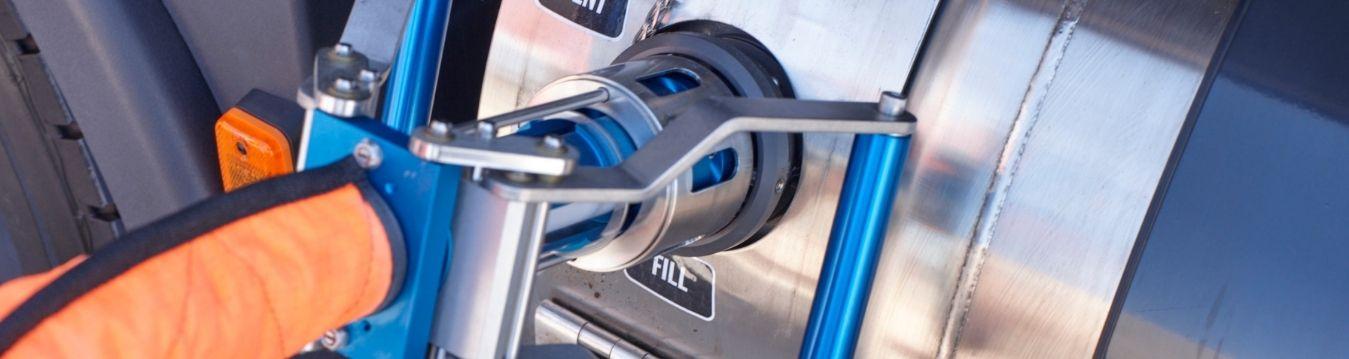
TotalEnergies Gas Mobility
Training service crews for stations spread across Europe
3
learning formats in one programme: 3D work instructions, blended and micro learning
What clients say
"Our HAZOP was complete. But in the debrief after a near-miss it turned out the operator involved didn't recognise the scenario at all. STARK moved that knowledge from paper to people."
The people we train.
From the operator on the floor to the training manager who must deliver audit trails, we build for the people who do the work and the people who assure it.
Process operator
Daily operation of process installations, start and stop procedures, alarm management and deviation response. Needs training that practises rare scenarios without disrupting the daily routine, modular, asynchronous and installation-specific.
Maintenance planner
Coordinates shutdowns, work permits and contractor planning. Needs insight into what contractors know and demonstrable completion of induction, before they appear on site.
Instrumentation technician
Maintenance and calibration of measurement and control equipment, safety systems and SIL-related instruments. Needs visual work instructions that match the actual installation and are accessible in the field.
HSE manager
Responsible for process safety assurance, HAZOP follow-up, PTW quality and audit readiness. Needs a training system that delivers demonstrable output, integrates with existing safety management systems and scales across multiple sites.
Turnaround coordinator
Responsible for the safe and efficient execution of shutdowns with hundreds of contractors on site. Needs induction processes that are scalable, completable in advance and immediately demonstrable, without burdening their own team.
Training manager
Responsible for competency assurance, LMS management and reporting to compliance and management. Needs training that integrates into existing systems, produces audit-proof output and is adaptable when procedures change.
Frequently asked questions
Where are you right now?
Not everyone reading this is ready for a conversation. Pick the step that matches where you are.
01 · Orient
Measure where you stand
Ten questions across five dimensions. You get a radar chart of your training maturity plus three things you can act on straight away.
Take the maturity scan
No form · 5 minutes
02 · Compare
See what it did for others
Cases at Gasunie, Enercon, TotalEnergies and Nel, with what actually changed in onboarding, retention and incidents.
View the cases
No form
03 · Decide
Put your situation to us
Tell us what you are dealing with. You get an assessment of approach, lead time and cost, not a sales pitch.
Ask for an assessment
Response within 24 hours
Want to know how we train process safety teams?
Milan
Business development, STARK Learning