
2 months
from briefing to live, in time for opening day
Sector
Energy & CO₂ StorageDuration
2 months
Solutions
Technologies
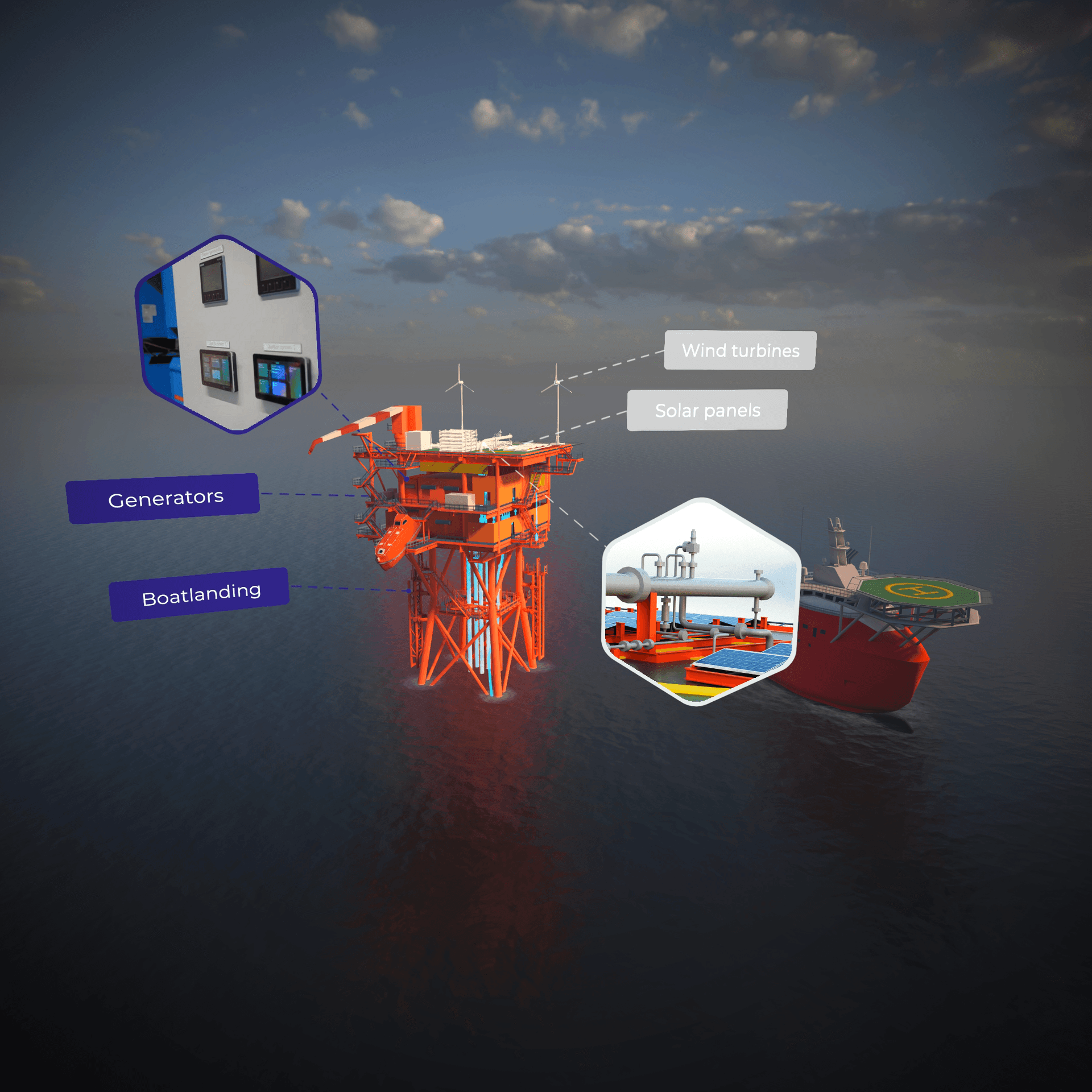
Porthos, a joint venture of the Port of Rotterdam Authority, Gasunie and EBN, is building a CO₂ transport and storage infrastructure under the North Sea. A pipeline system carries CO₂ from Rotterdam industry out to the depleted P18-A gas field, some 20 kilometres offshore, where it is stored at a depth of 3 kilometres.
The problem: none of that infrastructure is visible. Pipelines run underground and along the seabed, the platform sits far off the coast, and the storage geology is deep. For the general public, and for staff, partners and stakeholders at family days and events, it was close to impossible to grasp what Porthos actually does and why it matters.
Porthos was looking for an experience that could tell that story: immersive, accessible to every age group, and usable at a family day with hundreds of visitors, without demanding any technical knowledge.
Core problems
- › The infrastructure is entirely invisible to the public, underground and on the seabed
- › A complex chain (industry, pipeline, platform, storage) that is hard to explain
- › A broad audience: from young children to senior stakeholders on a family day
- › Usable at events without technical support or a fixed IT setup
- › Only 2 months of lead time before opening day
STARK designed a linear VR journey that tells the whole Porthos story in one flowing sequence, from Rotterdam industry down to geological storage kilometres deep. The STARK 4D route:
01
Discover
Analysis of Porthos documentation, technical drawings of the pipeline route and the P18-A platform, and the geological storage data. Narrative structure settled: a linear journey from Rotterdam to the seabed.
02
Design
Storyboard for 5 scenes: Rotterdam industry with its CO₂ capture point, the collection pipeline, the Maasvlakte pipeline route, the P18-A offshore platform, and the geological storage layer 3 km down. Dutch voice-over, pitched at every age group.
03
Develop
3D environments built from real location data and photography. Realistic rendering of the Rotterdam port area, the North Sea and the geological cross-section. Spatial audio for immersion.
04
Deploy
Ready on standalone VR headsets, with no wifi or technical setup needed at the venue. Porthos staff could guide visitors without any VR knowledge. Tested with the target audience ahead of the family day.
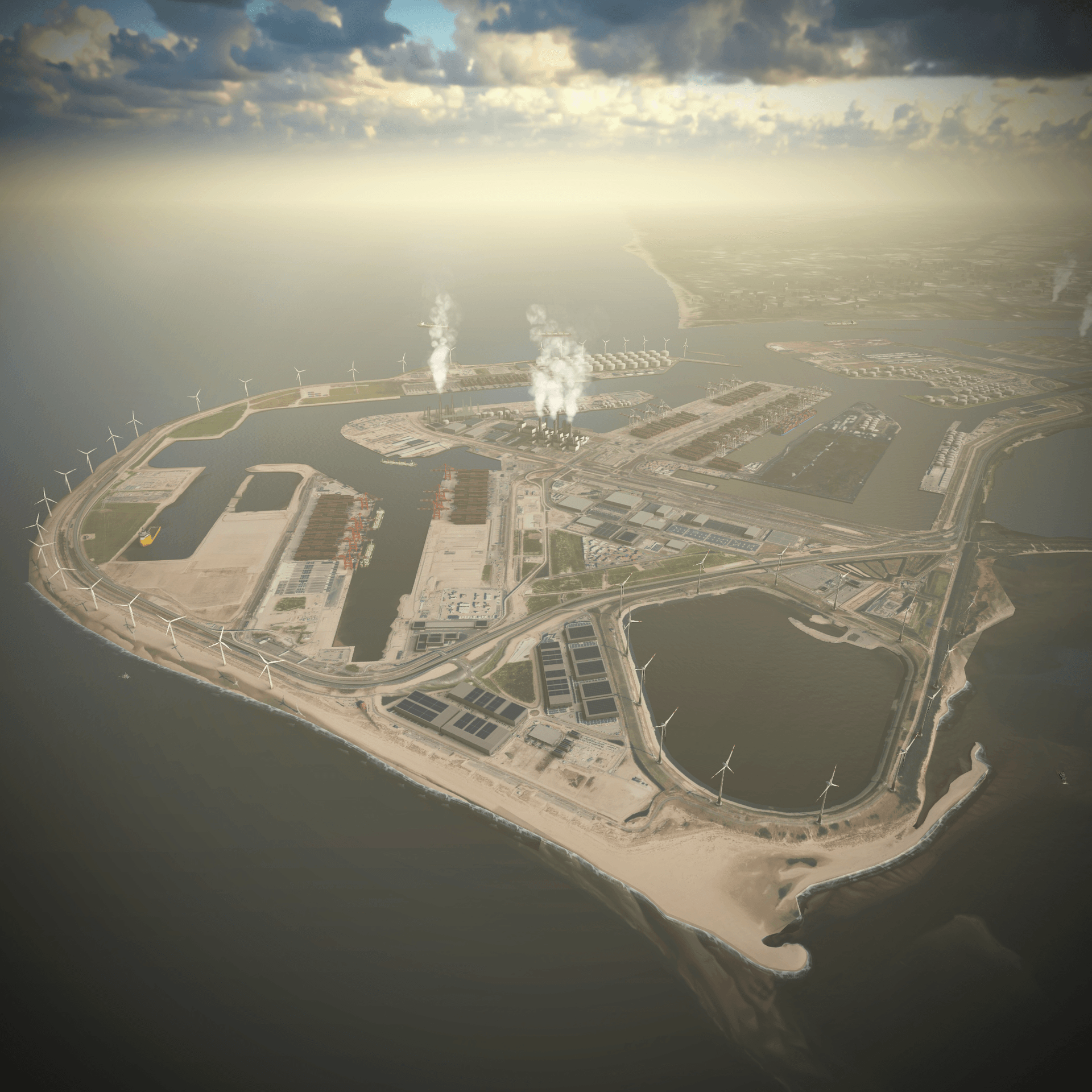
The result is a VR journey that takes visitors along the entire CO₂ route. It opens in the Rotterdam port area: CO₂ emissions visible at the industrial installations, and the collection points where the gas is captured. From there the visitor follows the pipeline out towards the sea.
Above the P18-A platform, the offshore pipeline junction 20 kilometres from the coast, they look down on the North Sea before the journey continues into the depths. Underwater, the pipeline runs on to the seabed wellhead, and finally the geological cross-section opens up: the storage layer 3 kilometres into the earth's crust, filled with CO₂.
A voice-over guides the whole experience in plain Dutch, so no VR knowledge or technical background is needed. It runs on standalone headsets and is ready to use at any event.
What was delivered
- ✓ A VR journey from Rotterdam industry to geological CO₂ storage
- ✓ 5 scenes built on real location data and photography
- ✓ Voice-over guidance in accessible Dutch
- ✓ Runs standalone on VR headsets, no IT setup required
- ✓ Ready to be run by Porthos staff with no VR experience
2 months
from briefing to live, in time for opening day
From the first briefing to going live at the event, 3D build and validation included
5
scenes across the full CO₂ route
Rotterdam industry, pipeline, P18-A, North Sea, geological storage
100%
standalone at events
No wifi, no PC, ready to use at any venue
What this means in practice
On opening day, Porthos could offer an experience that no brochure or slide deck can replicate. Visitors, children and senior stakeholders alike, stood literally above the P18-A platform and saw the storage layer 3 kilometres below them. That is what turns a complex climate story into something understandable and memorable.
Do you want to make complex energy infrastructure understandable for a broad audience?
Milan
Business development, STARK Learning