
The procedure is correct. Practice on the floor drifted away from it two years ago.
Every audit finding about working to procedure comes down to the same thing in the end: the SOP exists, but nobody works with it. We build procedures that can be followed while the work is happening, and that you can prove were read and understood.
Discuss this situationResults
- › Procedures in task order, not in system order
- › Available at the place where the work happens
- › Provably read and understood, per employee

A procedure nobody can consult during the work is not a procedure.
SOPs are written for the auditor. They are legally watertight, complete, and set in running text, which makes them unusable for someone wearing gloves, in a noisy environment, with a task that has to be finished now.
What happens instead is predictable: people do it the way they learned it from a colleague. That usually goes fine, right up to the day the situation deviates and nobody remembers why that one step was ever put in.
We leave the formal SOP intact, because you need it, and build the workable version alongside it: in task order, visual, on the device people already carry, with a record of who worked through which version.
Where this shows up
- › Audit findings about compliance with procedures
- › Procedures that never get rolled out after a change
- › Different sites each doing it slightly differently
- › New employees learning it from colleagues rather than from the SOP
- › No proof of who read which version
From document control to version control that people follow.
The biggest gain rarely sits in rewriting one procedure. It sits in the cycle that follows: when the installation changes, how fast does that reach the SOP, the work instruction, the training and the record showing that people know the new version?
We set that up as a single chain. The procedure is the source; work instruction, learning module and assessment all follow from it. A change goes in at the front and comes out in every place, including a per-employee record you can put in front of an auditor.
For organisations running several sites, this is also the moment differences surface: one task, three variants. Standardising then becomes a choice rather than a discovery after the fact.
The STARK 4D method
How we turn every challenge into a working solution, in four steps.
We start with your problem, not our solution.
What's really going on? What does success look like? We map what exists, what's missing, and what your people actually need. No assumptions, no templates. Just honest scoping and concrete examples of what's possible.
We translate your challenge into a clear plan.
Approach, format, timeline, all worked out with your team before we build anything. You know exactly what you're getting. No surprises halfway through.
We build it, and test it with your people.
Whether it's a VR simulation, an interactive module or a full blended programme: your subject matter experts are part of the build. That's how we make it accurate and relevant to the work floor.
Going live is the start, not the finish.
We support rollout, adoption and embedding. We track whether the training works and adjust where needed. Because training that's not used has no value.
Compliance you can demonstrate
Visible per employee which version was worked through, usable in internal and external audits.
Changes that land
A single adjustment works through procedure, instruction and training at the same time.
One way of working
Differences between sites and shifts become visible, and therefore solvable.
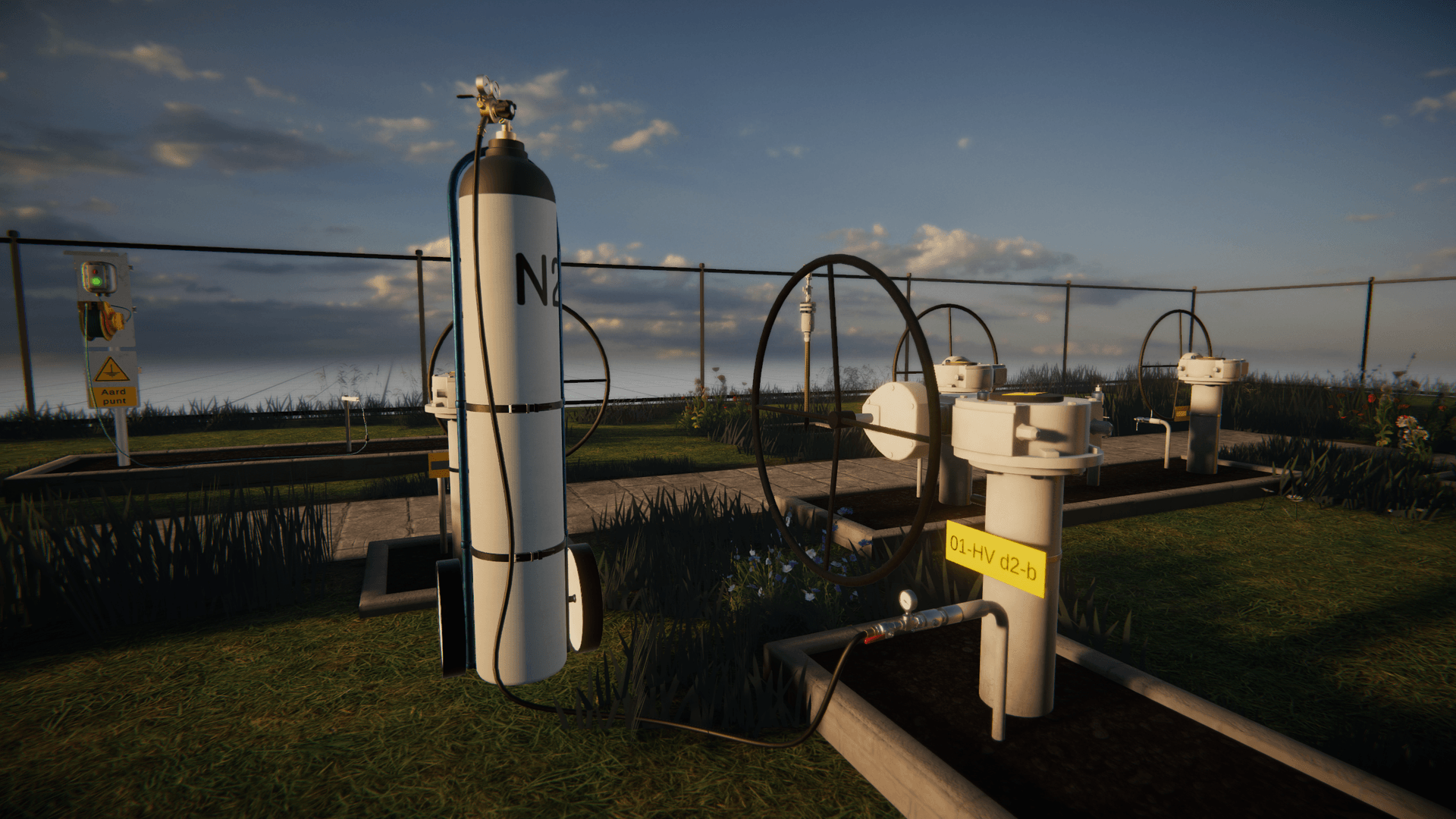
A procedure you have to follow while working asks for a different carrier than a document in a management system.

Where are you right now?
Not everyone reading this is ready for a conversation. Pick the step that matches where you are.
01 · Orient
Measure where you stand
Ten questions across five dimensions. You get a radar chart of your training maturity plus three things you can act on straight away.
Take the maturity scan
No form · 5 minutes
02 · Compare
See what it did for others
Cases at Gasunie, Enercon, TotalEnergies and Nel, with what actually changed in onboarding, retention and incidents.
View the cases
No form
03 · Decide
Put your situation to us
Tell us what you are dealing with. You get an assessment of approach, lead time and cost, not a sales pitch.
Ask for an assessment
Response within 24 hours
Do you recognise the gap between your SOP and the work floor? That is fixable.
Milan
Business development, STARK Learning