
The unspoken worry
When an organisation decides to digitise part of its training, the objection rarely comes out loud. What you hear is that it will become impersonal, that you have to read the room, that a module does not replace the discussion.
What sits underneath is something else: if the knowledge transfer goes digital, what is left of my role?
That is a real question and it deserves a real answer, because a trainer who feels made redundant is the most effective brake there is. They do not have to block anything; being lukewarm in front of the group is enough.
What really changes
Blended does not mean less trainer. It means the dullest part of the job disappears.
At the moment a trainer spends a considerable part of the day transferring basic knowledge: definitions, regulation, how the system is put together. That is necessary, but it is exactly the part a module does better, at each person’s own pace, repeatable, and without one participant waiting on another.
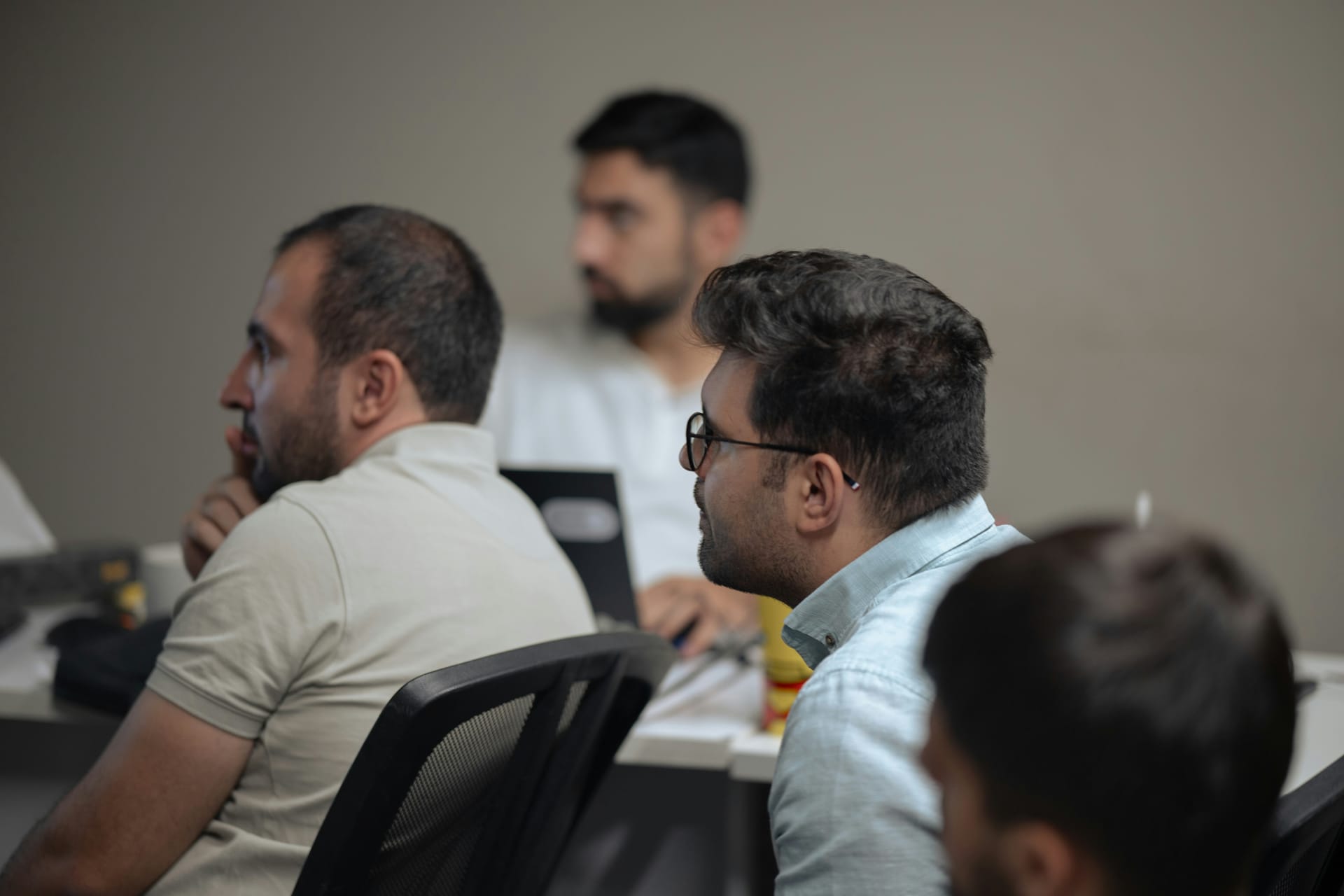
What is left in the room is the part that needs a human being: the discussion about how it really goes here, the question of where the procedure grates against practice, rehearsal with somebody who corrects you, and the conversation that only starts once somebody dares to say they have been doing it differently for three years.
That is heavier work in substance, not lighter. And it is the work an experienced trainer was hired for.
The reversed order
The practical heart of blended is that the order flips. Now: explanation in the room first, applying it yourself afterwards. Then: working through the knowledge yourself first, applying it in the room afterwards.
That comes with one hard condition: people have to have actually done the preparation. If they have not, the trainer starts explaining anyway, the prepared participants get bored, and after twice the confidence is gone.
Enforcing that is an organisational question, not a training one. Set the time aside explicitly in the rota rather than expecting it to fit in somewhere, and make participation visible to the supervisor.
How to introduce it
Three things decide whether the change succeeds.
Involve the trainers in the design. They know which questions every group asks and where it always goes wrong, and that is the best possible material for the digital preparation. Building it with them is also the fastest route from resistance to ownership.
Start with one programme. Not the whole course catalogue at once. Pick one, evaluate it honestly with the trainer, and adjust.
Be explicit about what happens to the trainer hours. If the classroom day halves, the question is what those hours become. Do they go to more groups, to better coaching at the workplace, or do they disappear? That answer decides whether your trainers cooperate, and it is fairer to give it up front than to let them guess.
The move to blended touches more than one programme. What it means for your training offering as a whole is in the guide on setting up or renewing a corporate academy. What blended involves in practice is under blended learning.